
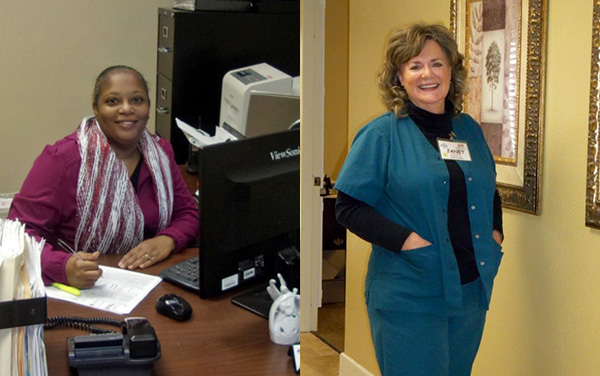
Activity professionals play a key role in enhancing a nursing home resident’s overall quality of life. Unknown to many is how much more in-depth the job is than planning events and recreation services.
In recognition of National Activity Professionals Week, the Alabama Nursing Home Association interviewed two long-time activity directors. We gained insight on the role activity professionals play in resident care, and how they approach this challenging and rewarding career field.
Activity Directors:
Janet Daughdrill has been Activity Director at Ashland Place Health & Rehab in Mobile for 38 years. She holds a Bachelors of Science in Therapeutic Recreation from the University of South Alabama. She has held numerous leadership positions on ANHA’s Activity & Social Service Auxiliary.
Shonda Young is Activity Director at Bill Nichols State Veterans Home in Alexander City. She has a Bachelors of Arts in English from the University of Alabama at Birmingham. She has been an activity professional for 17 years, and earned her national certification in 2006. She is Region 6 Director on ANHA’s Activity & Social Service Auxiliary.
How did you get started in long-term care and activities?
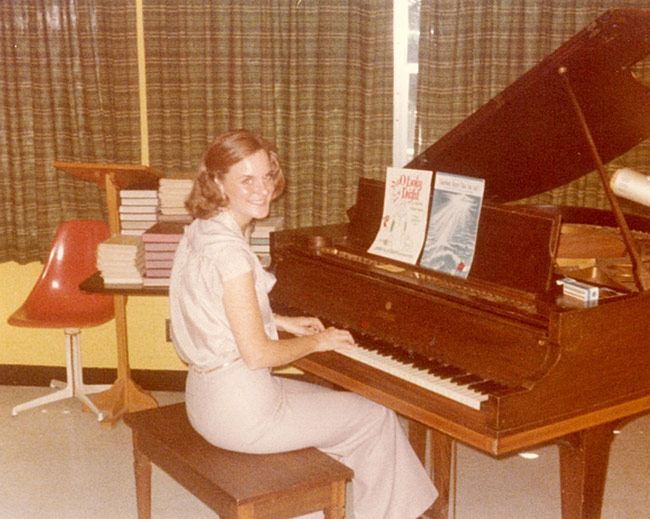
Janet Daughdrill in 1977, her first year as an Activity Director.
Janet: Initially, I wasn’t thinking of working in a nursing home. When I was in college, this facility called to see if there was a student who might be available to help. I happened to be in the office at the time and my professor encouraged me to go and to get interview experience. When I went to the interview, it all fell into place and it felt right and was a good fit. They welcomed me with open arms. I started part-time while in school and then went full-time when I graduated. This is the only career job I’ve ever held.
Shonda: My first job after college was at Russell Medical Center as the education coordinator. I worked there for four years until I had my first child. When I went back into the workforce, I started at Dadeville Healthcare Center as Activities Director. In 2006, I became Activity Director at Bill Nichols State Veterans Home.
Why is it important that nursing homes have activity directors?
Janet: We help enhance their overall quality of life. We’re here to find out what the residents like to do and try to make those things happen for them. When we can, we take them out and do special events as well. That helps them be a part of the larger community. For example, recently we took some of our residents to the Gulf States Fair. Some people at the fair were surprised to see nursing home residents. We explained that we’re all part of the community, and we make an effort to take our residents to community events. You must have an activity director to make sure all of that is coordinated because many residents are not able to do those things for themselves.
How is the Activities Department involved in care planning?

From left to right: Elizabeth Ross, Angela Knight, Shonda Young and LaStarla Simmons with Ms. Alabama Nursing Home 2014 Edna Farrell.
Janet: We meet with every resident and possibly their family within the first few days of them moving to Ashland Place Health & Rehab. We try to get as much information as we can and get everyone on the same page to make sure we’re setting realistic goals and plan appropriate activities for that individual. Our assessment includes the resident’s interests, what they used to enjoy doing, what they’re able to do now and what they want to do. We try to see how we can adapt to their interests. Family involvement is very important because we all have to work to help the resident maintain their current abilities or hopefully improve to the point that they’re able to care for themselves again.
Shonda: A care plan brings together all disciplines in the nursing home to assess the resident’s needs and then plan their care. You want to get to know their diet, medical needs and other things that all affect activities. It’s not just activities that I need to know about. For example, I need to know about their diet. When that resident comes to activities or we take them on a trip, we need to know what they can and can’t eat. We also have therapy so I need to know that resident’s mobility because we provide therapeutic exercises. We need nursing and social services to tell us about the resident’s behaviors so we know how to respond to the behaviors and provide proper activities. I have a 150 veterans, and I have 150 care plans.
During your career, what changes have you noticed in the people nursing homes serve?

Shonda Young with Johnny McIntyre, left, and Charlie Byrd, residents of Bill Nichols State Veterans Home.
Janet: The population we serve has really changed. We’ve started receiving a lot of younger people who have needs that are different from the needs of the elderly.
Shonda: When I started out at Dadeville Healthcare Center, it was a nursing home that catered to men and women. Now, I’m providing activities only for men. So the activities are a whole lot different since I’m catering only to men. Also, we’re more involved in care plan meetings and assessing resident needs. It’s much more in-depth to make sure you’re providing quality activities for residents.
How do you plan activities for a wide age range?
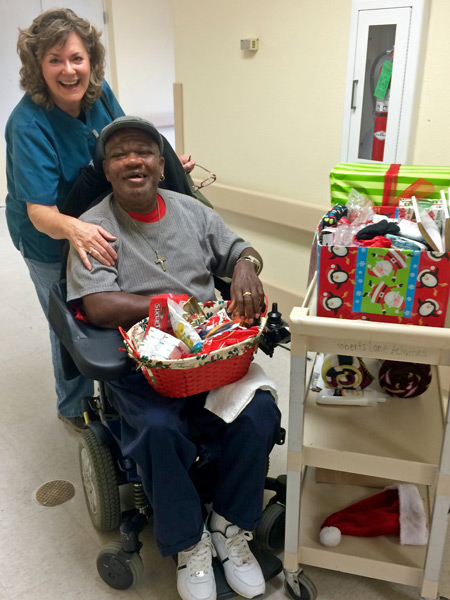
Janet Daughdrill and Ashland Place resident Daniel Coleman. Mr. Coleman received Christmas gifts from the Angel Tree program.
Janet: That can be a challenge, but I’ve found, over the course of time, that it’s not always necessary to separate the age groups. I’m finding some of the younger residents look out for the older residents and the generations mingle. We offer opportunities for different age groups, but many times they prefer to interact with all ages. A lot of younger people want to do independent activities and many of them use computers. However, they’ll also watch sporting events with the older residents. You’ll even find residents of different age groups hanging out and playing games or talking. I see some of the younger residents having compassion and empathy for the older residents. There are also older ones who have a soft spot in their heart for some of the younger ones who have injuries or disabilities. Sometimes if a younger resident doesn’t have much family influence, the older residents can fulfill the role of a grandparent.
How are activities for a veterans home different from a traditional nursing home?
Shonda: With veterans, we’re working with people who are very patriotic. We’re dealing with things that are part of their life that became part of our history. So a lot of it deals with history and bringing that out to staff, families and community. We’re here because of their service. We’re going in trying to bring their history back to them by talking about the things they have done themselves.
How are activities for a veterans home similar to a traditional nursing home?
Shonda: You’re getting to know them from the time they walk into the building. You ask what they previously enjoyed or liked. So that’s very similar, you get to know your residents and building a care plan around their wants and needs.
How important are volunteers to an activity department?
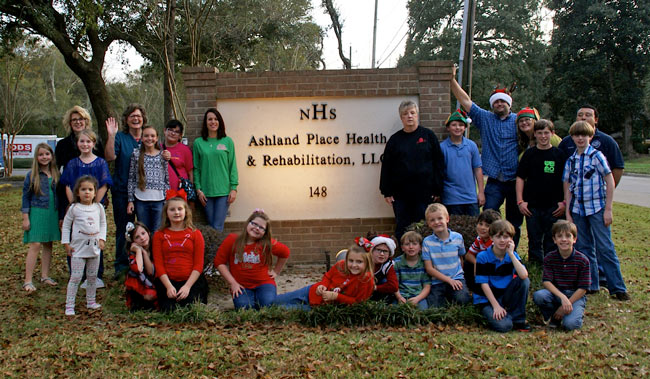
Students from West Mobile Baptist Church visit Ashland Place Health & Rehab.
Janet: Volunteers are essential. I talk to younger activity directors who try to do too much by themselves. If you try to facilitate and tap into resources it makes a lot more sense. You have to have more resources to help things run smoother. We have many groups that come in and they are so valuable; scouting groups, churches of all denominations, schools and individual volunteers who work one-on-one with our residents. It can be a simple task like read or giving one of the women a manicure. There are so many things people can do. All ages can volunteer.
Shonda: Volunteers are important for any facility to have another person to lean on and help. I’m the volunteer director for Bill Nichols State Veterans Home. Once the volunteers meet the qualifications, then I meet with them to learn what they’re interested in providing. There are many capacities they can serve in with the veterans or assisting the staff. Once a year, we host a volunteer appreciation event because we appreciate all our volunteers do.
What advice would you give an activity director who is in the early part of his or her career?
Janet: A lot of younger ones try to take too much on themselves and that’s a recipe for burnout. Don’t hesitate to ask for help. Reach out within your company and the greater nursing home community. Call other activity directors because most are willing to help you and share resources. Try to pass your extra resources along to another facility to help them. It’s important to talk to other activity directors to support each other and share ideas. Try to keep a positive attitude, don’t get overwhelmed, manage your time wisely and be organized.
What would you say to a college student to encourage him or her to consider becoming an activity professional?
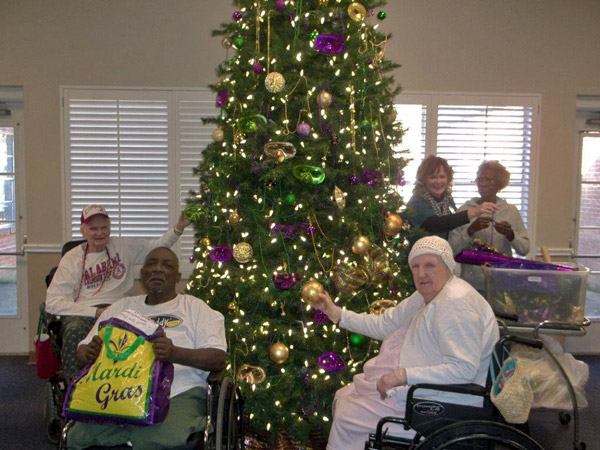
Janet Daughdrill and Ashland Place residents decorate a Christmas tree.
Janet: Make some visits to nursing homes and see what it’s all about. I always welcome students and will talk to them. You can always volunteer in a facility and get an idea and see if it is right for you. You must have a heart for people and empathy. We need more warm-hearted people to consider this as a career. If they’re interested, I hope they visit a nursing home to learn more.
Shonda: Number one, make sure health care is what you want to do. Not everybody is cut out for it. We don’t want this just to be a job, we want it to be what you love. You need to be passionate about your career field and each and everything you do daily for your residents. It’s a wonderful field. I love it and I wouldn’t change anything.
